n8n Security Issues: Risks of Automating Internal Workflows Without Visibility

Pluto Team
Feb 09, 2026・
6 min read


Workflow automation is now the foundation of contemporary productivity. Teams across many organizations use platforms like n8n to link programs, transfer data between systems, and eliminate tedious tasks. The unsettling reality is that most security teams are unaware of what these automations are doing. Such blind spots introduce problems, such as n8n security issues.
Today, you may find engineers, marketing, and operations professionals creating their own integrations in any tech business. They are no longer awaiting IT tickets. They are resolving issues on their own, frequently in minutes rather than weeks.

This change occurred quickly. Five years ago, automation was mostly the purview of specialized integration platforms run by IT departments. Now? Anybody can start workflows involving internal APIs, financial systems, or consumer data with just a web browser. Incredible efficiency gains have been made possible by the democratization of automation, but it has also produced a vast network of interconnected processes that lie outside conventional security measures.
The stats tell the story. Thousands of automated workflows are being used by organizations, many of which were created by individuals without any professional security expertise. These workflows may define a possible route across your infrastructure that is most likely unknown to your security staff.
With good cause, n8n has established a prominent position in the automation space. It provides teams with total control over their automation infrastructure, can be self-hosted, and is open source. Organizations with stringent data residency requirements will find n8n appealing because it can be run on your own servers, unlike cloud-only solutions.
The platform takes advantage of pre-built nodes to connect to many services. For instance, do you need to pull information from your CRM, add details from an external API, and upload it to your database? This can be set up in five minutes. Developers can write custom code, run JavaScript functions, and manage sophisticated logic that goes much beyond simple if-then statements with n8n.
Its popularity among technical teams is precisely due to this power. However, flexibility and authority can also introduce danger and definitely require responsibility.
Every n8n workflow that links systems builds a bridge between them. This bridge circumvents your typical security checkpoints. Consider the hypothetical examples below:
The employee who authored these processes above has the required privileges to run them. Imagine that six months ago, this employee quit the company, and their outdated database credentials are still being used by their automated setup. Then, last summer, for some reason, the marketing intern created a fast integration, leaving your email platform’s admin access available to that workflow. Do you see the amount of risk already introduced?
The compounding effect of these automations is the actual threat and may introduce various n8n security risks. An API is called by one workflow, which in turn updates a database. As a result, you have intricate chains of execution where data passes through several systems and crosses security barriers that your team took great care to maintain.
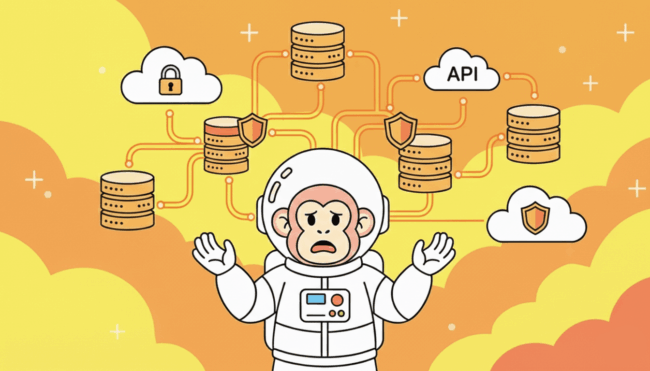
Attackers are aware of this. In the event of a successful security breach, they take over all of the access and permissions associated with a single automation workflow. To them, using such workflows as a launchpad to move laterally through your infrastructure is more important than simply obtaining the credentials kept in n8n. This is precisely how vulnerability chaining works.
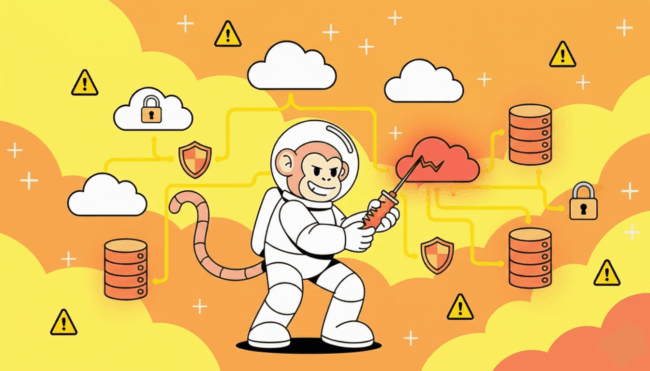
When researchers began examining n8n security vulnerabilities, the theoretical risks became apparent. Several significant vulnerabilities revealed recently (2025–2026) emphasized the risks associated with adopting advanced automation technology.
An unauthenticated remote code execution (RCE) vulnerability (CVE-2026-21858) that enables attackers to carry out arbitrary operations without approved credentials is a significant issue. Two others (CVE-2025-68613 and CVE-2025-68668) examined how code injection attacks could be enabled by n8n’s handling of user input in custom code nodes. Additionally, server-side request forgery (SSRF) vulnerabilities (CVE-2026-1470 and 2026-21858) were found, allowing attackers to access internal networks via n8n instances.
These results were particularly unsettling since they showed that, in addition to the technical nature of the vulnerabilities, process automation systems are attractive targets. These are all at risk, especially when a system that has been granted access to multiple other systems is attacked.
The n8n team should be commended for promptly delivering patches and implementing n8n security best practices in response to discovered vulnerabilities. Actually, though, many businesses don’t know which version of n8n they are using or who installed it. Shadow IT strikes once more.
Security teams have no idea how to automate workflows, and it’s not entirely their responsibility. Technically, conventional security tools are outdated, and even while your SIEM logs API calls, it is unaware that these requests are part of an automated workflow. Although your IAM system tracks user permissions, it doesn’t alert you when an automated workflow uses credentials that should have been changed months ago.
The larger problem is cultural. Automation platforms do not undergo the standard procurement and security assessment procedures because they are developer tools rather than business software. An engineer launches a n8n instance in a Docker container or on a spare host, and within a matter of hours, critical corporate operations are routed through it. The Security department never gets a chance to weigh in.
The sheer volume is another issue. There could be hundreds of workflows spread across several teams in a mid-sized business, each connected to different services. Different credentials are used, and each workflow handles different kinds of data. It is practically impossible to map all of this by hand.
Lastly, there is the issue of accountability. Who will take ownership of the workflow? Is it the platform team? The cyber security team? Are the individual developers building workflows?

N8n security vulnerabilities simply build up in the absence of clear ownership.

What is the answer, then? Teams rely too much on automation to simply stop using it. But you can’t disregard workflow automation security either.
Let’s start with visibility. You must be aware of something’s existence before you can secure it. List all of your organization’s n8n instances. Map out which workflows are operating, who controls them, and what systems they touch. This is tiresome; nevertheless, it is essential.
Put in place appropriate credential management. Credentials shouldn’t be explicitly stored in workflows. Rotate credentials frequently and make use of secret management tools. A workflow should raise red flags if it uses an individual’s personal API key. This is when service accounts with restricted access come in handy.
Apply the least privilege principle mercilessly. Does that data sync workflow actually require admin access? Most likely not. Verify that the permissions for each automation are kept to a minimum.
Create governance while avoiding bottlenecks. Standards are crucial, but not every workflow needs your approval. Create templates that incorporate n8n’s security-recommended practices for typical use cases. Make the safe route the simple one.
This is an example of how to use n8n security features in practice:
Build an effective monitoring system. Look for unanticipated patterns, such as workflows that suddenly start utilizing new systems, automations running at odd hours, or execution problems that might indicate manipulation.
What security risks are associated with workflow automation platforms?
The possibility of stored credentials being stolen, automated processes circumventing traditional security measures, workflow manipulation to exfiltrate data, and the ease with which attackers can move laterally between systems are among the primary risks associated with workflow automation platforms. Additionally, these platforms generally operate with higher permissions and lack proper audit trails, making it impossible to monitor which data has been viewed or to identify issues.
How can n8n workflows expose sensitive internal systems?
As intermediaries between systems, n8n processes have access rights to all the systems they link to. Databases, APIs, and cloud services can all be accessed concurrently by a single vulnerable workflow. Attackers who gain access to an n8n instance can exploit typical automation paths that security tools might not identify as suspicious to pivot across your entire infrastructure, since workflows often run with broad permissions and store credentials for numerous systems.
Why are automated workflows difficult for security teams to monitor?
Workflow automation was not intended to be understood by traditional security technologies. Because workflows frequently exist outside regular procurement procedures and are dispersed across multiple instances managed independently by teams, security teams lack visibility. Manually mapping them is practically difficult due to their dynamic nature and vast volume, sometimes reaching hundreds of operations. Furthermore, workflow operations appear to be legitimate API calls, making it difficult to distinguish between genuine automation and potential attacks.
What lessons can be learned from recent n8n vulnerabilities?
Recent n8n vulnerabilities reveal that automation platforms are high-value targets, as compromising them grants access to multiple connected systems simultaneously. Businesses discovered that updating automation platforms is essential, that default settings frequently lack sufficient security protections, and that many businesses are unaware of the location of their automation instances. Workflow automation must adhere to the same security regulations as any other crucial infrastructure component; it cannot be “set it and forget it.” The most important lesson is this one.
How can organizations secure internal automations without reducing efficiency?
By implementing appropriate credential management through secret vaults, establishing clear ownership and governance frameworks for workflows, developing secure templates that make adhering to best practices simple, and developing monitoring that alerts on anomalies without interfering with regular operations, organizations can improve security while maintaining efficiency. Instead of implementing security as a laborious afterthought that developers have to work around, the objective is to make the safe path the default.