Pluto Security and JFrog Partner to Extend Trusted Software Supply Chain Controls Across the AI Workspace

Oleg Mogilevsky

Tal Ofer Regev
Nov 24, 2026・
2 min read

Pluto Security is partnering with JFrog to extend JFrog’s software supply chain policies to AI agents and endpoints. Packages, skills, MCP servers and other AI artifacts are installed, used and published only through approved JFrog sources.
For years, the software supply chain had a front door. Developers chose packages, build environments pulled dependencies, and trusted repositories like JFrog Artifactory gave the organization one controlled path for the software coming in.
AI changed that model.
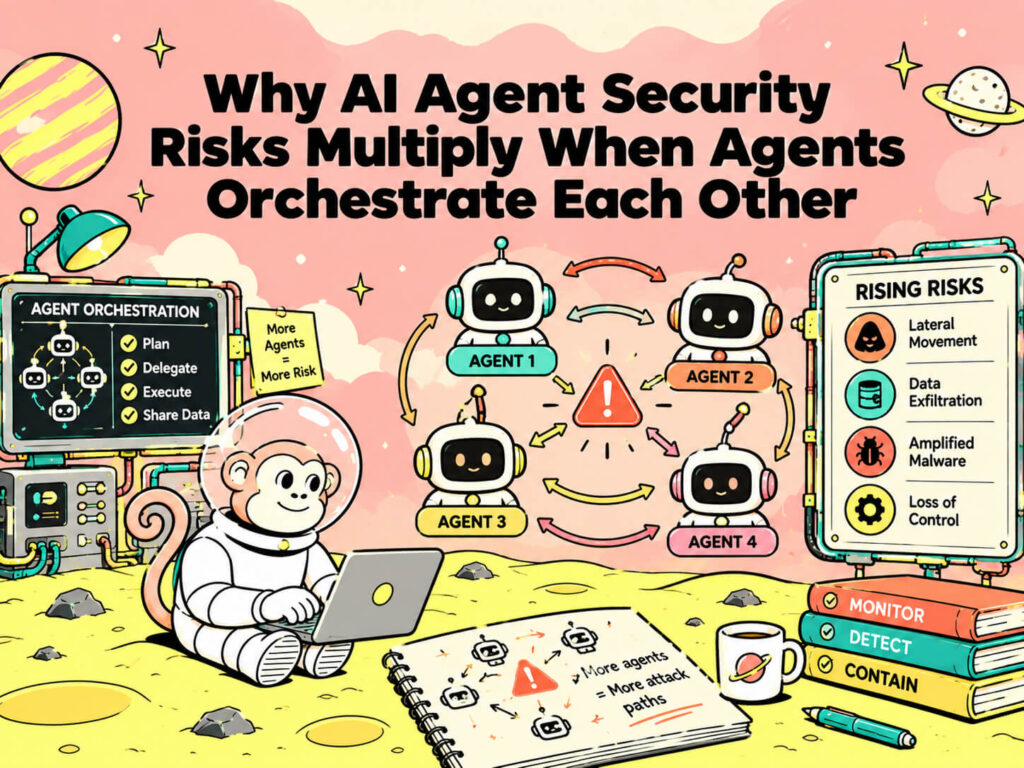
Coding assistants and autonomous agents now find and install packages themselves. They connect to MCP servers, use skills and plugins, and write software without a developer making every decision along the way. Nobody signs off on each step.
Yes, a developer could always go around the approved repository. But that was one person making one choice at a time. Agents make those choices all day, and nobody reviews them.
So the question for security and engineering teams is simple: how do you keep your trusted software supply chain intact when both people and AI agents can bring new components into the environment?
That’s where the Pluto and JFrog partnership comes in. JFrog defines what’s trusted. Pluto enforces it wherever the action starts, whether that’s a developer, an AI agent or another process on the endpoint.
One source of truth, now for agents too. JFrog stays the source of truth through Artifactory, AI Catalog and Curation. Pluto applies those same decisions to AI coding agents. You don’t need a separate definition of “trusted” just because the requester is an agent instead of a person.
Coverage across the whole endpoint. It isn’t only agents. Pluto stops users, scripts, package managers and other tools from going around JFrog and straight to public registries. Your supply chain policy reaches beyond traditional development workflows to the whole AI workspace.
Enforced at every layer: installation, usage and publishing. Pluto checks the JFrog policy when an artifact is installed, again when it’s used, and again when something is published. Passing the first check doesn’t earn a free pass for the rest.
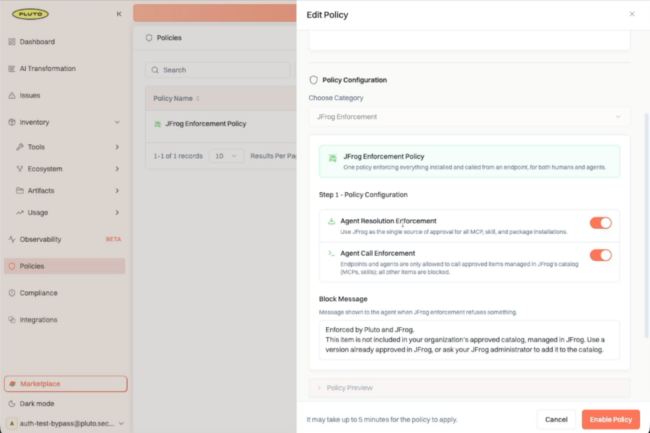
For security and engineering teams, that means fewer gaps between what the organization has approved and what actually runs, no matter who or what takes the action: a developer, an AI coding agent, a package manager or another process on the endpoint.
JFrog defines what’s trusted. Pluto enforces it across AI agents and endpoints.
As AI takes on a bigger role in how software is built, security teams shouldn’t have to choose between slowing innovation down and losing control. Together, we’re helping organizations move faster with AI while giving security teams the confidence to say yes.
The Pluto–JFrog integration is currently in beta.
If you’re already a Pluto customer and want to join the beta, talk to your Pluto customer success representative.
If you’re not a Pluto customer yet, book a demo to see the integration in action.