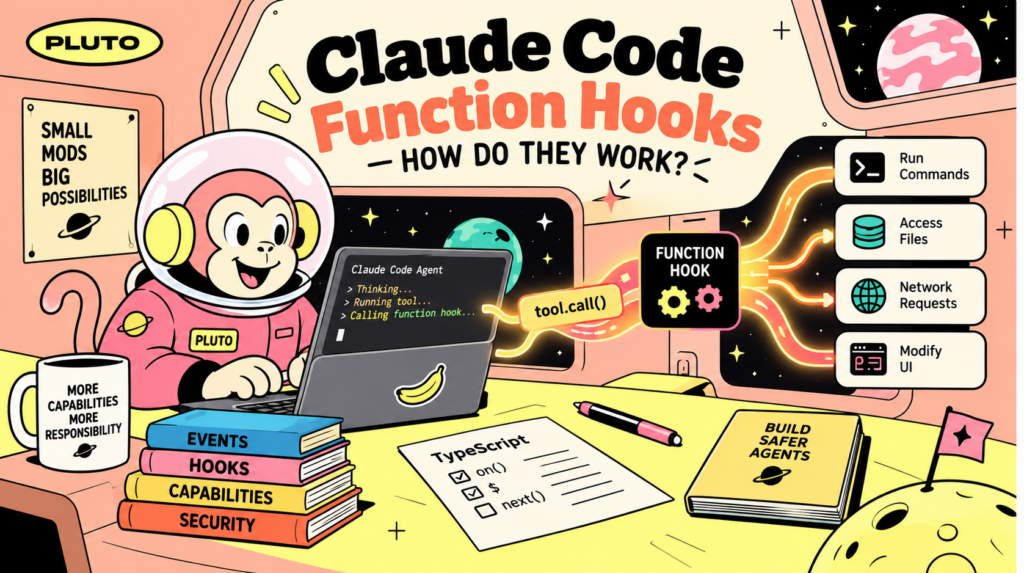
AI Agent Authorization at the Endpoint: Why Least Privilege Breaks Down for Non-Human Identities

Timor Halabi
Aug 24, 2026・
8 min read
Enterprise security has long relied on a fundamental assumption: identities are human. Identity and Access Management (IAM) has evolved to authenticate people and enforce access controls. That assumption is rapidly becoming obsolete in modern AI-driven environments as organizations deploy endpoint-based AI coding assistants and autonomous agents such as Claude Code, Cursor, local Model Context Protocol (MCP) servers, and browser-use agents.
Organizations are deploying autonomous AI agents that can perform tasks and make operational decisions with minimal human intervention. While many organizations are investing in AI agent authentication, authentication alone answers only one question, namely who is entitled to access. A more difficult question is what AI agents should be allowed to do once access is granted. This article discusses AI agent authorization as one of the defining security challenges of the AI era.
Unlike traditional applications that authenticate with dedicated service accounts, AI agents run directly on the user’s workstation, using the user’s existing security context. During this process, they can inherit active single sign-on (SSO) sessions, access cached cloud credentials, read local configuration files such as ~/.aws/credentials and kubeconfig, use Git credential helpers, and access API keys stored in .env files. They also interact with enterprise applications without establishing a separate machine identity.
All this creates a fundamental authorization challenge: from the IAM perspective, every action appears to originate from the legitimate user, even when decisions and operations are performed autonomously by an AI agent. Traditional least-privilege controls cannot effectively distinguish between human intent and agent behavior because there is no separate token exchange, identity boundary, or scope reduction. As a result, at the endpoint, the AI agent effectively becomes human, creating an endpoint authorization gap.
AI agent authorization and user authorization are closely related concepts but serve fundamentally different purposes. Authorization generally determines permissions, that is, what users should be allowed to do after they have been authenticated. For human users, authorization decisions are generally based on:
AI agents operate differently. Unlike human users, an AI agent may:
However, in modern environments characterized by the rapid adoption of AI, unlike employees, AI agents lack business judgment and do not understand organizational context. They simply execute according to their objectives and granted permissions without human intervention. Consequently, AI agent authorization often requires far more granular, dynamic, and context-aware controls than traditional user authorization to keep enterprise AI environments secure.
Another security challenge arises when an AI agent’s objective can be manipulated through untrusted inputs. For instance, prompt injection attacks can lead to an AI agent ignoring its original instructions and executing attacker-controlled directives. If the agent has already inherited broad user permissions, every privilege it holds may effectively become available to the attacker. This is an example of a confused deputy problem, in which a trusted AI agent is tricked into misusing its legitimate authority on behalf of an untrusted source while appearing to operate within its authorized security context.
The Principle of Least Privilege (PoLP) has been traditionally a cornerstone of cybersecurity for decades. The concept is straightforward: grant identities only the minimum permissions required to perform their tasks. For human users, this model has all along been highly effective because of the following underlying assumptions:
After the application of the PoLP, periodic access reviews typically focus on the evaluation of the following variables:
The entire access review process assumes that people generally perform predictable business functions and that those functions are subject to close and effective control. However, in the current agentic AI world, these assumptions no longer hold. AI agents are increasingly operating more dynamically, with their activities becoming more continuous, objective-driven, and often spanning multiple applications, identities, and workflows. As a result, static permission models are struggling to keep pace with these changing operational requirements.
Unlike static automation scripts that execute predefined tasks and have characterized most computing environments for some time, modern AI agents continuously adapt to achieve business objectives. For example, a customer support agent may perform a range of functions such as:
Assigning permissions in such environments is increasingly complex, as each step an AI agent takes may require different permissions or a combination of permissions. The challenge is that authorization decisions often occur only at the start of a session and not continuously thereafter. For example, once authenticated, an AI agent may continue performing actions far beyond what it is assigned and what security teams anticipated. This creates what is known as ‘privilege creep’, where an agent’s effective capabilities exceed its intended business purpose because static permissions fail to reflect the ever-changing objective. This means that several characteristics make traditional least privilege increasingly difficult to enforce for AI-driven autonomous systems:
While these permissions may simplify deployment, they also significantly increase security risks as agents navigate to address unassigned tasks.
From a security perspective, each additional interaction expands the attack surface and increases authorization complexity throughout an organization.
Most traditional endpoint security tools focus on detecting malicious software rather than validating authorization decisions. They can accurately record events such as process execution, file access, network connections, and registry changes.
However, this is often insufficient in modern AI-driven environments because such tools cannot answer critical governance questions:
This endpoint authorization gap often creates blind spots across an organization that become increasingly significant as AI adoption expands. This leads to security teams missing the following risks:
Modern enterprises should not rely on authentication alone to secure endpoint AI agents. Instead, they should redesign their authorization models to ensure that AI agents operate with explicit, constrained, and continuously verified permissions, rather than inheriting unrestricted human privileges. Key security practices to implement include:
As AI agents become increasingly autonomous, security architectures must evolve beyond traditional user-centric IAM to continuously evaluate what they are permitted to do, under what conditions, and for how long.
AI agent authentication verifies an AI agent’s identity before granting access to enterprise systems and resources. Authorization determines which resources an authenticated AI agent may access and which actions it may perform. A strong security posture requires both capabilities. This is because strong authentication without robust authorization can still leave enterprises exposed to excessive permissions.
Traditional least privilege assumes predictable human roles and relatively static access requirements, assumptions that no longer hold in modern AI-driven environments. AI agents can now dynamically discover information, interact with multiple systems, and perform evolving tasks with increasing autonomy. This makes traditional permission models difficult to maintain and increases the risk of overprivileged identities across the entire organization.
Security teams should assign unique identities to AI agents and adopt modern security practices, including Just-in-Time (JIT) access, continuous authorization, and context-aware enforcement. Enterprises should also maintain detailed audit logs and integrate authorization decisions with modern security architectures such as Zero Trust, while proactively aligning governance with recognized AI security frameworks.
Identity is no longer exclusively human, as AI agents increasingly access enterprise systems, process sensitive information, and execute business-critical tasks without direct supervision. While authentication confirms an agent’s identity, authorization defines the boundaries within which it can safely operate. Traditional least-privilege models were designed for predictable human behavior, not for autonomous software that can adapt its actions in real time. Security leaders in AI-driven environments must therefore evolve their identity strategies beyond static permissions to include dynamic authorization, continuous policy evaluation, and robust governance for non-human identities.
Useful References