MCP Security in AI Integration Protocols, Package Ecosystems, and External Tool Connections
Jul 20, 2026・
6 min read
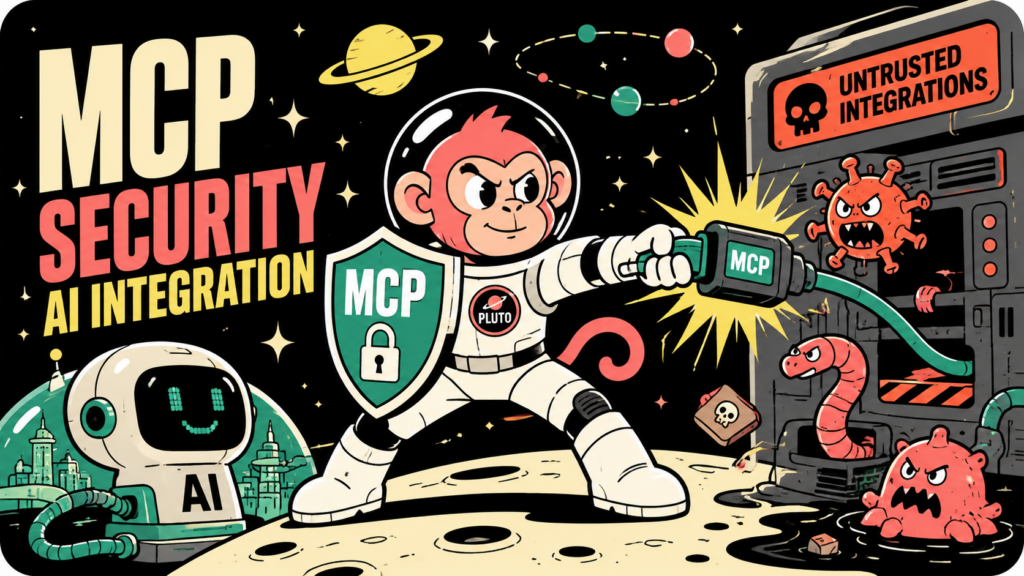
The rapid adoption of Model Context Protocols (MCPs) and AI integration technologies that standardize communication between models and external systems has led to new security risks in modern developer environments. While these protocols accelerate interoperability and expand agent capabilities by enabling AI systems to dynamically discover tools, autonomously invoke actions, and access external resources, they also introduce complex trust relationships and new attack vectors. A compromise within one integration point may cascade across entire AI workflows, tools, and other connected systems. This article explores the security implications of MCP-enabled development environments, with a primary focus on integration protocols, package ecosystems, and external connectivity.
In modern enterprise deployments, MCP architectures often connect LLMs and AI agents to a variety of internal and external resources and services. This architecture significantly expands operational capability while simultaneously creating interconnected trust relationships that many enterprises do not fully inventory or govern. MCP vulnerabilities typically leverage package ecosystems and registries as attack vectors, as explained below:
As a result, a compromised package may introduce threats to development environments, including attacks such as credential theft, data exfiltration, and prompt manipulation. They may also allow unauthorized API access, session hijacking, and any autonomous malicious actions within enterprise environments.
Unlike conventional software libraries, MCP packages often operate with elevated contextual access to AI workflows and enterprise systems. This significantly amplifies the potential blast radius of a successful compromise. They also consist of dependency chains that create invisible trust paths, as shown below:
Typical MCP-Enabled AI Workflow
AI Agent

└── MCP Framework

└── Third-Party Tool Connector

└── External Package Dependency

└── Cloud API Integration
What makes the above workflow riskier is that each layer introduces additional exposure. As a result, security teams frequently lack visibility into transitive dependencies, dynamic tool loading, and runtime prompt injection. They may also not be aware of any external API trust relationships and autonomous execution paths within developer workflows. This creates conditions in which malicious functionality may remain undetected within otherwise legitimate AI workflows.
Note: Enterprises that seek to evaluate broader AI supply chain exposure should also review this resource: Pluto Security’s analysis of AI supply chain security risks involving reused models, prompts, and internal applications.
Attackers can also impersonate MCP tools or hijack maintainer accounts to send malicious updates and compromise downstream environments. Because MCP frameworks often run within privileged AI orchestration environments, compromised registries can give threat actors indirect access to critical enterprise resources, including APIs, cloud credentials, and messaging systems. This elevates MCP vulnerabilities beyond conventional open-source risk into enterprise-wide operational exposure.
External tool connectivity is one of the most powerful yet riskiest aspects of MCP architectures. Modern AI agents frequently interact with critical enterprise resources, including CRM systems, CI/CD pipelines, ticketing systems, and email platforms. This scenario creates complex trust relationships that traditional security models were never designed to govern. The following are some of the hidden risks that arise from these external tool connections:
This creates security challenges that are fundamentally different from those of standard API integrations. In many environments, the AI system itself frequently becomes an autonomous orchestrator operating across multiple trust domains, further increasing risk exposure.
Because MCP systems often maintain shared context across sessions and tools, a single compromised interaction may propagate across broader orchestration chains through lateral movement. This creates conditions where localized manipulation evolves into systemic compromise across the development environment.
| Connected System | Potential Risk |
| Slack integrations | Data leakage |
| CI/CD platforms | Supply chain compromise |
| Cloud APIs | Infrastructure abuse |
| CRM systems | Sensitive customer exposure |
| Git repositories | Source code theft |
| Email services | Account takeover and phishing |
The table above highlights the need for security teams to gain visibility not only into the AI model itself but also into every downstream tool and service the model can access.
Many enterprises mistakenly treat MCP environments as standard API ecosystems despite fundamental architectural differences. There is, therefore, a huge risk of oversimplification, which often creates significant blind spots and governance failures. While traditional APIs generally operate through explicit requests, deterministic workflow, and human-controlled execution, MCP-enabled AI systems introduce fundamentally different operational characteristics as highlighted below:
This reduces human oversight and increases their unpredictability and exposure to potential attacks.
Organizations examining identity-related MCP exposure are also advised to review this guidance: Pluto Security’s analysis of critical MCP-related vulnerabilities in Nginx environments.
No. Any organization using AI integrations, agent frameworks, external tool connections, or MCP-enabled workflows can face many of the MCP-related exposures outlined in this article. In fact, smaller organizations may actually face higher risk because they often lack mature visibility, dependency governance, and runtime monitoring systems. They may also not have effective AI-specific security controls within and across their interconnected systems.
Third-party MCP packages are generally riskier than first-party integrations because they may contain unverified code, hidden dependencies, and malicious updates. They may also contain insecure implementation patterns. Enterprises typically have limited visibility into maintainer practices, dependency chains, and runtime behaviors of third-party MCP packages, making external packages substantially harder to validate and govern than internally developed integrations.
Yes. External data sources often introduce additional trust boundaries, authentication exposure, data integrity risks, and potential prompt injection vectors that are absent in internal data sources. AI systems interacting with external services may therefore unknowingly ingest manipulated or poisoned content. This can then trigger unsafe downstream actions through compromised or malicious integrations, thus contaminating the entire developer environment.
MCP vulnerabilities can bypass established identity and access mechanisms, enabling unauthorized actions. This usually happens when AI agents inherit excessive permissions, long-lived tokens, or broad API access across the development environments. Autonomous workflows may also unintentionally escalate privileges, chain identities across services, or access systems in ways that traditional IAM architectures were not designed to monitor and govern effectively.
Yes. This happens often because many MCP frameworks maintain shared context, memory, authentication state, or orchestration logic across connected tools as part of their operations. This means that a compromised MCP tool may manipulate session behavior, influence agent decisions, exfiltrate shared data, or trigger malicious actions. These malicious actions can then affect other connected integrations within the same execution environment.
The next generation of enterprise AI risk will not originate solely from the models themselves but from the interconnected ecosystems surrounding them. While MCP architectures enable extraordinary operational efficiency and automation capability, they also create dynamic attack surfaces that traditional security models were never designed to govern, as explained in this article. For enterprise security leaders, the challenge is whether organizations can establish sufficient visibility, governance, and runtime control before autonomous AI ecosystems become deeply embedded across critical infrastructure and operational workflows.
Useful References